

If you’re a golfer, you know that each club in your bag has a specific purpose and distance range. Understanding your average distance with each club can help you make better decisions on the course and improve your overall game. In this guide, we’ll show you how to calculate your average club distances and provide tips for improving them.
Understanding the Importance of Knowing Your Average Distance
Knowing your average distance with each golf club is crucial for making strategic shots on the course. It allows you to choose the right club for the shot, avoid hazards, and ultimately improve your score. Without this knowledge, you may find yourself constantly guessing and making poor decisions that could cost you strokes. So, take the time to calculate your average club distances and use that information to your advantage on the course.
Factors That Affect Your Distance.
There are several factors that can affect your distance with each golf club, including your swing speed, ball speed, launch angle, spin rate, and the type of ball you are using. Improving any of these factors can lead to an increase in distance, so it’s important to work on your technique and equipment to optimize your performance on the course. Additionally, factors such as wind, temperature, and altitude can also impact your distance, so be sure to take these into account when making your shots.
Shaft (Weight and Flex)
When it comes to golf, the distance you can achieve with each club can vary greatly depending on a number of factors. One of the most important factors is the type of shaft you are using. For example, if you are a beginner golfer with a high handicap and are using a stiff steel shaft, you may find that you are not able to achieve the same distance as someone with a more flexible shaft. It’s important to choose the right equipment to make the game as enjoyable and successful as possible.
When it comes to golf, the distance you can achieve with your clubs is largely determined by the speed of your swing. However, it’s important to note that the weight and stiffness of your club shafts can also have a significant impact on your performance. To optimize your game, it’s recommended that you invest in shafts that are tailored to your swing and club speeds, ensuring that you can hit the ball with maximum power and accuracy.
Swing Speed
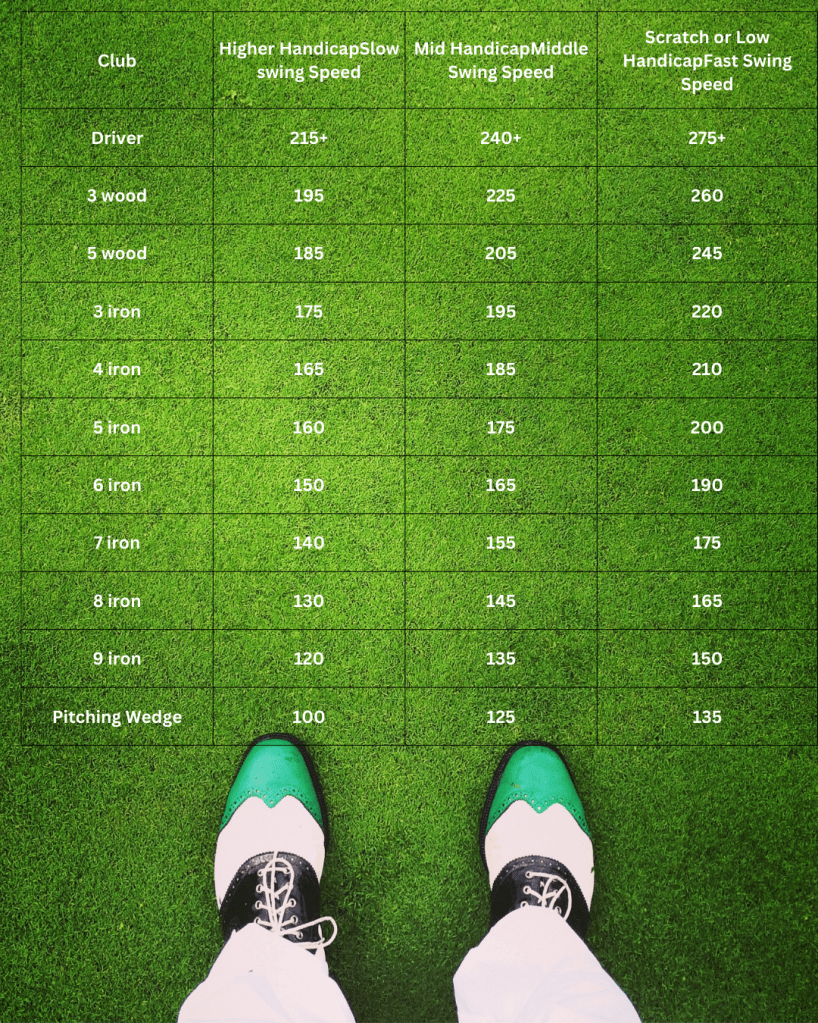
When it comes to golf, the distance you can hit the ball with each club is a crucial factor to consider. However, the key to achieving greater distance is your swing speed. According to data from Trackman, swing speed is highest when using a driver and lowest when using a pitching wedge. So, if you want to improve your average distance with golf clubs, focus on increasing your swing speed.
Golfers use different clubs for different distances, with the driver being the longest-hitting club. On average, a golfer can hit their driver around 200-230 yards, while a 3-wood can reach around 170-200 yards. Irons are used for shorter distances, with a 9-iron typically hitting around 80-90 yards and a pitching wedge around 50-60 yards. However, swing speed plays a big role in how far a golfer can hit their clubs, so increasing speed can lead to longer distances.
Clubhead
When it comes to golf clubs, the average distance you can hit the ball varies depending on the club you’re using. For example, a driver is designed to hit the ball the farthest, thanks to its longer length and lower loft. However, it’s not just the length and loft that affect distance – the size of the clubhead also plays a role. A driver typically has a larger clubhead than a 7 wood, which can also contribute to longer shots.
The average distance you can hit a golf ball with a club depends on a variety of factors, including the clubhead, shaft, and loft. For example, a 19 degree hybrid and a 19 degree 5-wood may have the same loft and shaft, but the 5-wood may add an extra 5-10 yards to your shot. It’s important to experiment with different clubs to find the ones that work best for your swing and playing style.
When it comes to golf clubs, the average distance you can hit a ball varies depending on the type of club you use. For example, a 5-wood has a larger clubhead than a hybrid, which can make the ball go further but also increases the chance of missing your target. It’s important to consider this when choosing between higher loft woods, hybrids, and long irons to find the right club for your game.
Age & Health
The average distance you can hit a golf ball with your clubs depends on a variety of factors, including your age and overall health. As you age, you may experience a decrease in strength and flexibility, which can lead to a decrease in distance.
However, there are exceptions to this rule, such as professional golfer Greg Norman, who has maintained his strength and flexibility well into his later years. Ultimately, the distance you can hit your clubs will vary based on your individual circumstances.
Golfers of all ages and skill levels can improve their game with consistent exercise and stretching. Even as we age, we can offset the effects of time on our bodies and maintain our abilities on the course. Just take a look at Gary Player, who has continued to play at a high level well into his golden years.
Knowing how far each of the golf clubs in your bag will hit is essential to successful golfing. The average distance one can achieve with their golf clubs varies from player to player, but typically a driver will achieve the longest shots with an average distance of 250 yards. Woods and hybrids come in second with a range of 130-180 yards, followed by irons at 80-130 yards depending on the club number, and finally wedges ranging from 40-60 yards.
Knowing the average distance you can cover with each golf club is essential when it comes to playing great as a senior. Different clubs have different purposes and having an idea of their distances makes it easier to plan your game correctly for maximum performance.
Generally, golf club distances vary between the woods and irons, but averages can be estimated based on swing speed measurements. For instance, a driver typically covers 250 yards, while a five iron gives around 140 yards of carry. Understanding these distances can help seniors improve their game significantly.
Weather Conditions
When it comes to golf, the average distance you can hit a ball with each club can vary greatly depending on a number of factors, including your swing technique, physical strength, and the weather conditions on the course. Wind, rain, and temperature can all impact the distance your ball travels, so it’s important to take these factors into account when selecting your club and planning your shots.
Golf is a sport that requires skill and precision, and one of the most important factors in achieving success on the course is knowing the average distance you can hit each club. However, golfers also have to contend with various weather conditions that can affect their game, from scorching heat to chilly rain and strong winds. Despite these challenges, golfers continue to enjoy the game and strive to improve their skills.
When it comes to determining the average distance you can hit with your golf clubs, it’s important to keep in mind that weather conditions can have a significant impact on your shots. Whether you’re playing in windy or rainy conditions, or dealing with extreme temperatures, it’s important to adjust your expectations accordingly and factor in these variables when planning your shots.
Golf Balls
The average distance you can hit a golf ball with each club in your bag depends on a variety of factors, including your swing speed, the loft of the club, and the type of ball you’re using. While a harder ball may travel farther, it’s important to consider other factors when choosing the right ball for your game, such as spin, feel, and control. Ultimately, finding the right combination of club and ball can help you maximize your distance and improve your overall performance on the course.
When it comes to choosing the right golf club for a shot, distance is not the only factor to consider. The spin of the golf ball is also important, and harder balls tend to have less spin. It’s important to keep in mind that if you don’t have enough swing speed, it can be difficult to get your approach shots to land and stay on the green. So, when selecting a club, consider both distance and spin for the best results on the course.
When it comes to golf, the average distance you can hit a ball with each club varies depending on a number of factors. These include your swing speed, the loft of the club, and the type of ball you’re using. Additionally, when you’re close to the green, the spin you put on the ball can greatly affect how far it travels. So, while it’s important to know the average distances for each club, it’s also important to consider these other factors for a more accurate estimate of your total distance.
Tips for Improving Your Distance
Improving your distance with each golf club takes practice and patience. One way to improve is to work on your swing technique, focusing on generating more clubhead speed and hitting the ball with a square clubface.
Another way is to invest in custom-fitted clubs that are tailored to your swing and body type. Additionally, practicing with different types of balls and experimenting with different launch angles and spin rates can also help improve your distance.
Remember to also take into account external factors such as wind and temperature when making your shots.
Using Your Average Distance to Make Better Shots on the Course
Knowing your average distance with each golf club is crucial for making strategic shots on the course. By understanding your average distance, you can better plan your shots and choose the right club for each situation. To calculate your average distance, hit several shots with each club and record the distance of each shot. Then, calculate the average distance for each club. With this information, you can make more informed decisions on the course and improve your overall game.
Average Distance for PGA Tour Players
Have you ever wondered how far professional golfers can hit each club? It’s a common question among golf enthusiasts, and for good reason. Knowing the average distance that pros can hit their clubs can help you improve your own game and set realistic expectations for your shots.
When it comes to the average distance with golf clubs, it’s important to keep in mind that PGA Tour Players are playing at a different level than most amateur golfers.
While the average distance for a driver among PGA Tour Players is around 295 yards, the average distance for an amateur golfer is closer to 215 yards. However, with practice and dedication, amateur golfers can improve their distance and accuracy on the course.
Golfers are always looking for ways to improve their game, and knowing the average distance for each club can be a helpful tool. According to a study by Trackman and Golf.com, PGA Tour players have an average carry distance for each club.
This study also provides additional statistics such as ball speed, attack angle, launch angle, and spin rate, which can help golfers fine-tune their swings and improve their overall performance on the course.
Average Driving Distance for PGA Tour Players and LPGA Tour Players
On average, a PGA Tour player’s driver distance is 275 yards. While this may seem like a relatively short distance compared to the jaw-dropping 320-360 yard drives you see on TV, it’s important to remember that these are professional athletes with years of training and experience.
For the average golfer, a driver distance of 200-250 yards is considered good, so don’t be too hard on yourself if you’re not hitting it as far as the pros!
Have you ever wondered why your golf shots don’t seem to travel as far as the pros on TV? One reason is that the average distance with golf clubs varies greatly depending on a number of factors, including swing speed, ball type, and course conditions.
While professional golfers may hit their drivers over 300 yards, the average amateur golfer typically hits their driver between 200-250 yards. Similarly, the average distance for a 7-iron is around 150 yards for amateurs, compared to 170-180 yards for professionals. So don’t be too hard on yourself if your shots don’t quite measure up to the pros!
When it comes to determining the average distance with golf clubs, there are several factors that come into play. These include the type of club being used, the golfer’s swing speed and technique, the weather conditions, and the type of ball being used.
Generally, drivers are designed to hit the ball the farthest, with an average distance of around 200-230 yards for amateur golfers. Irons, on the other hand, are used for shorter distances, with the average distance varying depending on the specific iron being used. Wedges are typically used for shots within 100 yards of the green, while putters are used for the final shots on the green.
Golf club distance is a hot topic in the golfing world, and there are several strategies you can use to increase your distance. One way is to improve your flexibility through stretching and yoga. Another is to work on your swing mechanics and consistency through lessons and practice. Weight training can also help build strength and power in your swing.
Additionally, using SuperSpeed Golf weighted clubs can train your fast twitch muscles and increase your swing speed by 5-8% in just 4-6 weeks. Investing in new equipment can also help, but it’s important to remember that distance isn’t everything and to focus on a combination of distance and accuracy. Tee height can also affect driving distance, but it’s important to find the right balance between distance and accuracy. Ultimately, adding distance to your game takes work, but it’s worth it to improve your overall golf performance.
The average distance you can hit a golf ball with your clubs varies depending on the loft of the club. A driver with a loft of 8-12 degrees can send the ball flying over 250 yards, while a pitching wedge with a higher loft may only travel between 100-130 yards. The less loft a club has, the more distance you can expect to achieve with your shots.
When it comes to golf clubs, it’s important to consider the strength of the loft. In recent years, the loft of standard clubs has become stronger, with pitching wedges now ranging from 42-44 degrees. This means that they are more similar to traditional 9 irons in terms of loft strength.
It’s important to keep this in mind when selecting the right club for your shot and determining the average distance you can achieve with each club.
The distance a golf ball travels is directly related to the loft of the club used. Generally, the lower the loft, the farther the ball will travel.
When it comes to golf clubs, the average distance you can hit them depends on a variety of factors, including your swing speed, the loft of the club, and the type of ball you’re using. Generally speaking, drivers can be hit up to 250 yards, while irons can range from 100 to 200 yards depending on the number and loft of the club.
Of course, these are just averages, and your own distance may vary based on your individual skill level and physical abilities.
 CrispyBoysGolf
Leave a comment